
Industry News
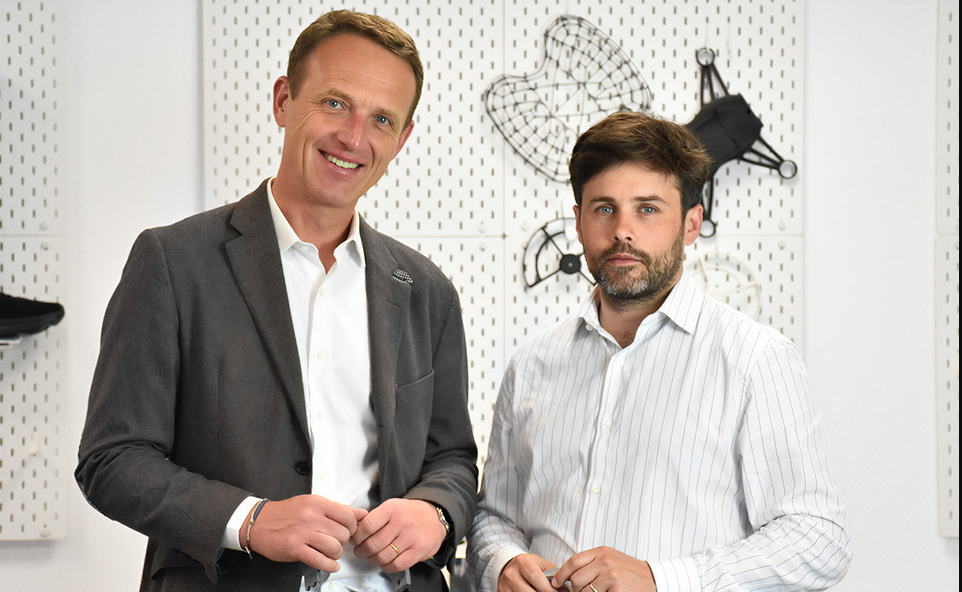
New French Additive Manufacturing Service Emerges Via Merger
French AM bureau 3D Prod acquired Sculpteo, creating one of Europe’s larger integrated additive manufacturing service groups. The deal reflects ongoing consolidation among AM service providers as companies seek scale, broader customer reach, and improved utilization rates amid a still-challenging industrial manufacturing environment. For customers, the merger could strengthen European on-demand manufacturing capacity and reduce reliance on overseas suppliers.
America Makes Launches Two Additive Manufacturing Project Calls Worth $25.6M
America Makes and NCDMM announced two new funding initiatives focused on additive metals interchangeability and in-situ process monitoring. The MIAMI and INSITE programs target a major bottleneck in industrial AM adoption: qualification consistency between machines, materials, and facilities. The projects are especially relevant to aerospace and defense suppliers seeking faster certification pathways and more reliable process validation.
Snapmaker Raises Millions as Chinese Big Tech Investors Pile Into 3D Printing
Consumer and prosumer 3D printer maker Snapmaker secured a major Series B funding round backed by investors tied to Xiaomi, Meituan, and other large Chinese technology firms. The investment underscores growing confidence in consumer additive manufacturing ecosystems, particularly multi-material and creator-focused platforms. It also signals intensifying competition with Bambu Lab and other rapidly expanding desktop printer manufacturers.
New Products & Technologies
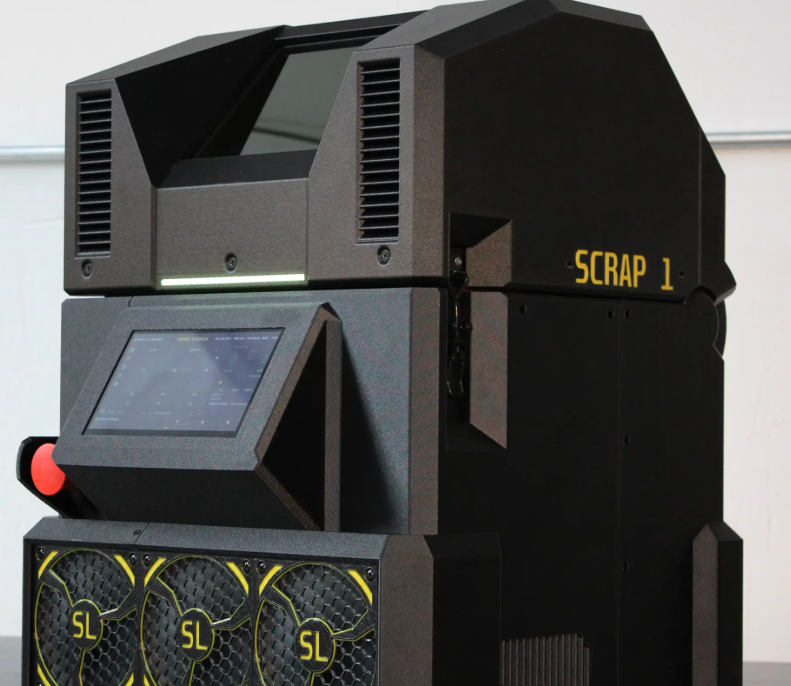
New Metal 3D Printer Shrinks Industrial Tech Down to Workbench Size
Scrap Labs unveiled the “Scrap 1,” a compact laser powder bed fusion metal printer priced below $10,000. While its 100 × 100 × 100 mm build volume targets labs, universities, and advanced makers rather than production facilities, the machine dramatically lowers entry costs for metal AM experimentation. If reliability and safety prove sufficient, the platform could accelerate workforce development and small-scale prototyping adoption.
Powered by DealMaker, Timeplast Raises $5M to Scale Sustainable Materials and AI-Enabled 3D Printing
Materials company Timeplast announced a $5 million raise focused on biodegradable materials and AI-assisted manufacturing workflows. Sustainable polymers remain an important strategic area for additive manufacturing as regulators and enterprise customers increasingly scrutinize lifecycle impact and recyclability. The combination of materials innovation and AI-based optimization could help improve print efficiency and waste reduction.
Regulatory & Standards Updates
A Hazard Analysis Technique for Additive Manufacturing
Although not new research, the paper continues to gain relevance as AM moves deeper into safety-critical applications. The work highlights cybersecurity, software reliability, and process integrity risks that increasingly concern aerospace, medical, and defense regulators. As additive manufacturing becomes more digitally connected, standards bodies are expected to place greater emphasis on cyber-resilience and process traceability.
Research & Academic Insights
Turning Hearsay into Discovery: Industrial 3D Printer Side Channel Information Translated to Stealing the Object Design
Researchers demonstrated how power side-channel monitoring can reconstruct designs from industrial powder bed fusion printers without direct access to CAD files. The study achieved surprisingly high reconstruction accuracy, highlighting a growing intellectual property security concern for distributed manufacturing environments. For defense contractors and industrial manufacturers, the findings reinforce the need for physical and digital safeguards around production systems.
Strategic Adoption of 3D Printing in Multi-Product Supply Chains: Cost and Capacity Considerations
This supply-chain modeling study examined when additive manufacturing becomes economically viable relative to traditional production. The researchers found that AM can remain advantageous even when per-part costs exceed conventional methods, particularly under constrained inventory or demand uncertainty scenarios. The work supports the growing industry narrative that AM’s strategic value increasingly lies in agility and resilience rather than solely cost reduction.
First 3D Printed IH-Type Linac Structure — Proof-of-Concept for Additive Manufacturing of Linac RF Cavities
Researchers successfully demonstrated a functional accelerator cavity produced using metal additive manufacturing. The project validates AM’s ability to fabricate complex RF geometries with integrated cooling structures that would be difficult or impossible using traditional machining. Similar approaches could eventually reduce manufacturing complexity for scientific instrumentation, aerospace hardware, and high-frequency electronics.
Sector Applications
Aerospace: 3D Printing Shakes Up the Space Industry — Rocket propulsion companies including Rocket Lab and Ursa Major continue expanding use of highly integrated metal AM components. The trend is accelerating because additive manufacturing enables lighter parts, faster iteration cycles, and reduced supply chain complexity for rocket engines and hypersonic systems.
Defense: Newington-Based GKN Aerospace Gets $2.5 Million Grant Through Connecticut Supply-Chain Initiative — GKN Aerospace plans to establish additive manufacturing operations in Connecticut by 2027, supporting both aerospace and potential maritime defense applications. The move aligns with broader efforts to localize strategic manufacturing capabilities and improve supply-chain resilience.
Consumer: Thingiverse Acquisition by MyMiniFactory — MyMiniFactory’s acquisition of Thingiverse represents another major shift in the consumer 3D printing ecosystem. Control over large model repositories increasingly influences community engagement, creator monetization, and printer platform ecosystems as desktop printing becomes more mainstream.
Social Chatter
Multi-material desktop printing remains the dominant topic across Reddit, YouTube, and maker communities, with Snapmaker’s U1 and Bambu Lab ecosystem comparisons driving heavy discussion. Users are also debating whether affordable metal powder bed systems like Scrap Labs’ Scrap 1 can realistically bring metal AM into maker spaces without major safety compromises. AI-assisted print monitoring and workflow automation continue gaining traction, especially around error detection and calibration. On Reddit, many users are discussing ecosystem lock-in concerns as hardware vendors increasingly tie printers to proprietary cloud services, model repositories, and subscription-based software features. Enthusiasm around faster, easier desktop printing remains extremely high, but so do concerns about repairability and long-term platform openness.