
Industry News
DJI invests in ELEGOO to diversify into consumer 3D printing — DJI became a shareholder in ELEGOO’s parent company on Nov 18, signaling Chinese Big Tech’s growing interest in desktop AM. While the stake size wasn’t formally disclosed, reports indicate a strategic hedge amid U.S. regulatory pressure on DJI’s core drone business. For hobbyists, more capital flowing into low‑cost FFF/LCD ecosystems could accelerate price competition and feature velocity.
Bambu Lab’s MakerWorld escalates copyright dispute; Creality denies infringement — In mid‑November, Bambu’s MakerWorld accused rival repositories of hosting re‑uploaded, allegedly infringing models; Creality said it received no legal notice and rejected the claims. The episode highlights unresolved IP enforcement challenges around community‑shared CAD, with potential implications for platform trust, moderation workflows, and creators’ monetization.
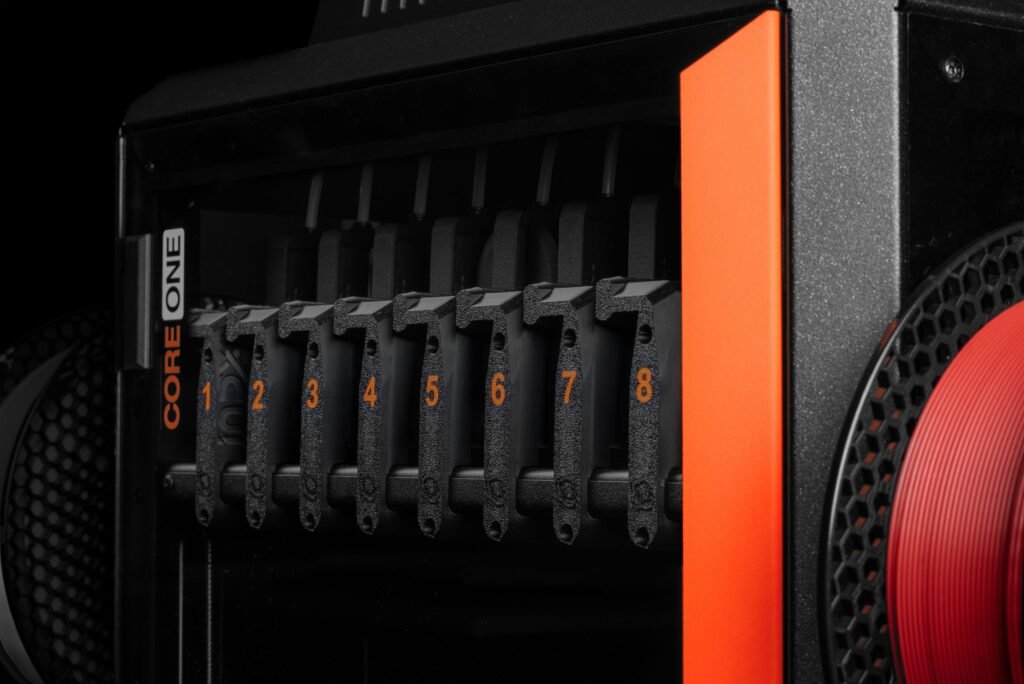
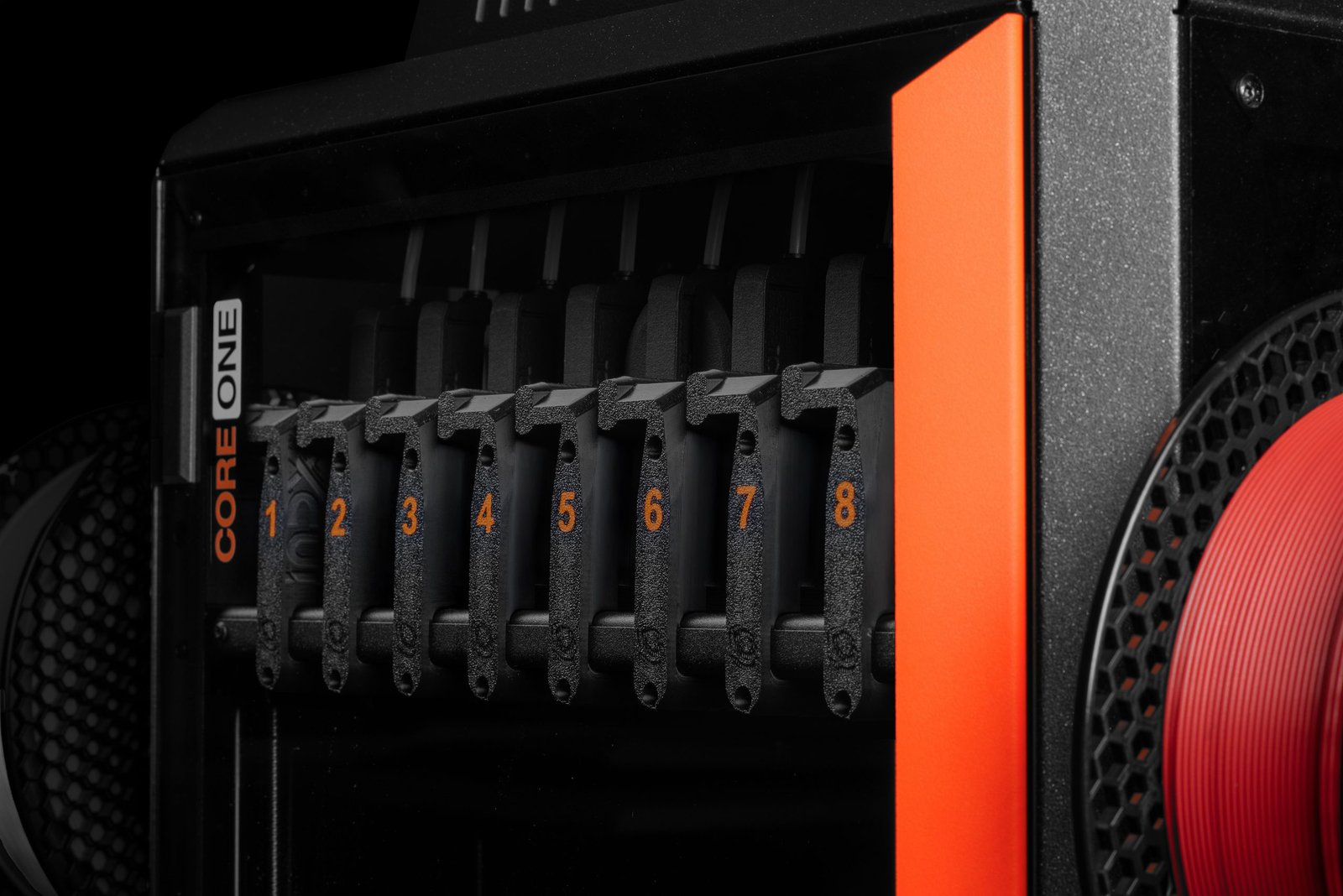
Prusa formalizes CORE One+ upgrade and Formnext 2025 lineup — Prusa paused shipments briefly and resumed Nov 27 as “CORE One+,” rolling in mechanical updates and automatic top‑vent operation. The company also previewed INDX tool‑changing and accessory roadmap (HT Hotend, dryboxes), signaling continued push into professionalized desktop.
New Products & Technologies
3D Systems launches SLA 825 Dual high‑throughput SLA — Dual synchronous 4 W lasers, 830×830×550 mm build, and 50–150 µm layers target fast, accurate production of large polymer parts. Positioned for 24/7 operation with HyperScan and a revamped UI, shipments begin December for customers needing SLA surface quality at higher volumes.
Bambu Lab unveils H2C dual‑nozzle with Vortek auto‑changer — Shown at Formnext, H2C introduces induction‑heated nozzles and near‑zero purge switching to cut waste and multi‑material downtime. Intro pricing and early‑December ship timing place it squarely into semi‑pro desktop, raising the bar for automated tool/nozzle handling on consumer‑priced machines.
Prusa + Bondtech INDX tool‑changing for CORE One family — INDX separates a single active “Smart Head” from passive, low‑cost toolheads, enabling 4–8 materials without long buffer paths or purge chutes. The design aims for scale and serviceability, targeting low‑waste color/material workflows for education, design, and light production.
OrcaSlicer 2.3.1 ships with November updates — The popular open‑source slicer posted a mid‑Nov release across Windows/macOS/Linux. Notable for rapid profile iteration and community‑driven features, the cadence keeps pressure on OEM forks and proprietary slicers to improve calibration tools and multi‑material support.
Regulatory & Standards Updates
ASTM partners with Additive Center to accelerate AM certification for semiconductor suppliers — Announced Nov 19, the collaboration focuses on structured certification pathways for AM parts in semiconductor tooling and equipment. Expect clearer qualification plans and operator competency frameworks to shorten time‑to‑approval in a sector demanding high cleanliness and repeatability.
Research & Academic Insights
UT Austin team secures $14.5M DARPA award to advance AM for semiconductors — The effort aims to push 3D‑printed structures for future microsystems and advanced packaging, addressing design freedom limits of subtractive processes. If successful, it could expand AM’s role in micro‑scale channels, interposers, and thermal management for AI hardware.
Hydrogel chemistry enables NO‑releasing, ROS‑scavenging 3D‑printed blood vessels — A Nov 27 paper in Biotechnology & Bioengineering reports functionalized bio‑inks that both release nitric oxide and quench reactive oxygen species. The approach improves vascular construct viability and could accelerate patient‑specific in‑vitro disease modeling and regenerative graft R&D.
‘Necroprinting’: mosquito‑proboscis tips as ultra‑fine 3D printing nozzles — McGill researchers re‑purposed biological micro‑structures (~20 µm ID) reinforced with printed scaffolds to produce low‑cost, high‑resolution nozzles. While early‑stage, the method hints at sustainable, disposable tooling for bioprinting and micro‑fabrication labs.
Sector Applications
Aerospace/Defense: Mobile 3D‑printing “xCell” factories to produce drones forward‑deployed — Firestorm’s containerized units integrate industrial printers to output ~17 drones per week; fits DoD push for agile, low‑cost sUAS supply.
Medical/Dental: University of Sydney team 3D‑prints artery‑mimicking vessels for stroke research — Ultra‑precise, patient‑specific vessels enable controlled thrombus studies, potentially informing device design and treatment protocols.
Construction: Earth‑based 3D printing studied as sustainable housing option — Swinburne University is evaluating clay/soil mixes for structural elements as Australia explores lower‑carbon, local‑material builds.
Consumer/Automotive: Fully 3D‑printed titanium road bike debuts — J.Laverack, with Loughborough University, introduced Speedform; additive methods enable complex aerodynamics and integrated structures for high‑end cycling.
** Social Chatter:** Maker forums and subreddits are dominated by Bambu’s late‑November firmware and cloud/LAN debates, with users weighing feature gains vs. ecosystem lock‑in (thread 1, thread 2). The MakerWorld vs. Creality IP dispute remains a lightning rod, with creators discussing evidence standards and DMCA‑style processes (news, MakerWorld post). On YouTube, Formnext walk‑throughs of giant machines and booths are trending, giving hobbyists a window into industrial‑scale gear (video). Finally, slicer fans swapped notes on the OrcaSlicer 2.3.1 drop and profile tweaks, with many experimenting on Prusa CORE One(+) and Bambu fleets (down